
Landing Page Design Guide for Beginners
If you want more sign-ups, leads, or sales from your website, learning how to design a landing page is one of the smartest places to start. A landing page is not just another webpage. It is a focused, goal-driven page built to get one specific action from a visitor, such as downloading a guide, requesting a demo, joining a newsletter, or buying a product.
For beginners, the good news is that effective landing page design does not require advanced design skills. It requires clarity, a simple structure, persuasive copy, and a layout that helps visitors quickly understand what you offer and why they should act now. In this guide, you will learn the essential principles of landing page design and how to apply them step by step.
What Is a Landing Page?
A landing page is a standalone page created for a single marketing goal. People usually arrive on it from an ad, email, social post, or search result. Unlike a homepage, which serves many audiences and links to many sections, a landing page keeps attention on one specific conversion goal.
The best landing pages remove distractions and guide the visitor toward one clear action. That action is usually supported by a headline, short explanation, benefits, visuals, and a call to action button.
Start with One Clear Goal
The first rule of landing page design is focus. Before you choose colors or images, decide exactly what you want the visitor to do. A landing page should have one primary goal, not three or four competing ones.
Examples of strong landing page goals include:
- Sign up for a free trial
- Download an ebook
- Book a consultation
- Register for a webinar
- Buy a product
When the goal is clear, every part of the page can support it. This makes the page easier to understand and more effective at converting visitors.
Use a Simple, Focused Structure
Beginners often try to fit too much information onto a landing page. That usually hurts performance. A better approach is to use a simple structure that answers the visitor’s main questions in a logical order.
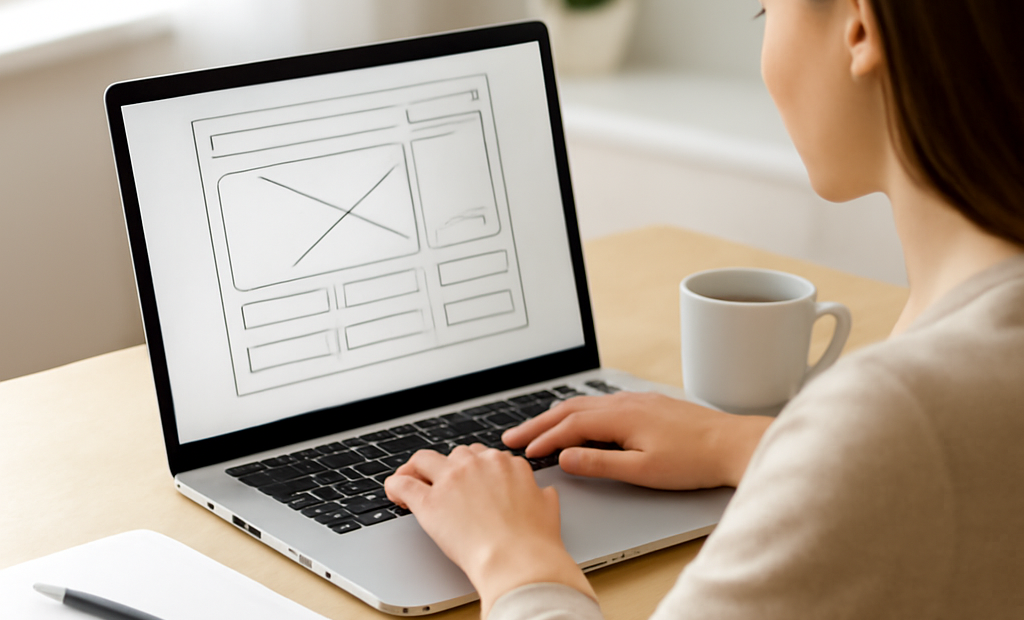
A basic landing page structure
- Headline: State the main benefit or offer clearly.
- Subheadline: Add a short explanation or supporting detail.
- Hero section: Show the offer with a strong image, product preview, or relevant visual.
- Benefits: Explain why the offer matters and what the user gains.
- Proof: Include testimonials, reviews, numbers, or trust badges.
- Call to action: Make the next step obvious and easy.
This structure works because it matches how people scan pages. Visitors first look for relevance, then value, then proof, and finally the next action.
Write a Headline That Gets Attention
Your headline is one of the most important parts of the page. It should immediately tell visitors what the page is about and why they should care. A weak headline makes people leave. A strong one keeps them reading.
A good landing page headline is usually:
- Clear rather than clever
- Benefit-focused
- Relevant to the traffic source
- Short and easy to scan
For example, instead of writing “A Better Way to Grow,” you might write “Grow Your Email List with a Free Landing Page Template.” The second version is more specific and more convincing.
Support the Headline with Persuasive Copy
Once the headline gets attention, the copy needs to build interest. Keep the language simple and direct. Your goal is not to impress readers with fancy words. Your goal is to help them understand the value quickly.
Good landing page copy focuses on benefits, not just features. A feature describes what something is. A benefit explains why that feature matters.
For example:
- Feature: “Includes a drag-and-drop editor”
- Benefit: “Build pages faster without needing a developer”
Try to answer the visitor’s likely questions: What is this? Who is it for? How does it help? Why should I trust it? Why should I act now?
Design for Readability and Speed
Visual design plays a major role in landing page success. A page can have excellent copy, but if it looks cluttered or loads too slowly, many visitors will leave before converting.
Keep the design clean and easy to scan. Use plenty of white space, readable font sizes, and a clear visual hierarchy. Headings should stand out. Important information should be easy to find. Buttons should be visible without overwhelming the page.
Also pay attention to speed. Large images, too many scripts, and unnecessary animations can slow down the page. A faster page usually creates a better user experience and can improve conversions.
Use Strong Visuals That Support the Message
Images and graphics should help explain the offer, not distract from it. Choose visuals that feel relevant, realistic, and aligned with your brand. If you are promoting software, show the interface. If you are selling a service, show the team, process, or result. If you are offering a physical product, show it clearly in use.
Useful visual types for landing pages include:
- Product photos
- Interface screenshots
- Simple illustrations
- Short demo videos
- Before-and-after images
Avoid stock images that feel generic or unrelated. Visitors trust pages more when the visuals match the message.
Make the Call to Action Clear
The call to action, or CTA, is the button or link that tells visitors what to do next. It should be easy to spot and use language that matches the goal of the page. A vague CTA like “Submit” or “Click Here” is usually weaker than a more specific one.
Better CTA examples include:
- Get the Free Guide
- Start Your Trial
- Book My Consultation
- Join the Webinar
- Download Now
Try to repeat the CTA in key places on longer pages, especially near the top and again after important sections. This gives visitors more chances to convert without searching for the button.
Add Trust Signals
People are more likely to convert when they feel confident in your brand. Trust signals reduce uncertainty and help visitors feel safe taking the next step.
Common trust signals include:
- Customer testimonials
- Star ratings or reviews
- Client logos
- Security badges
- Short case study results
- Money-back guarantees
Use only trust signals that are genuine and relevant. Real proof is more persuasive than hype. Even one strong testimonial near the CTA can make a difference.
Keep Forms Short and Easy
If your landing page includes a form, keep it as simple as possible. Every extra field can reduce conversions. Ask only for the information you truly need at this stage.
For a beginner-friendly landing page, start with the essentials:
- Name
- Email address
- One optional detail if needed
If you are asking for more information, explain why it is required. The easier the form feels, the more likely people are to complete it.
Test and Improve Over Time
A landing page is rarely perfect on the first try. The best results often come from testing different versions and learning what your audience responds to. Even small changes can improve performance.
Things you can test include:
- Headline wording
- CTA button text
- Button color or placement
- Image choices
- Length of the page
- Form fields
Use data to guide your decisions. Look at conversion rate, bounce rate, scroll depth, and form completion rate. These metrics help you understand what is working and what needs improvement.
Common Beginner Mistakes to Avoid
Many landing pages fail because of a few avoidable mistakes. If you can spot these early, you will save time and improve your chances of success.
- Too many goals: One page should promote one action.
- Unclear headline: Visitors should know the value immediately.
- Too much text: Keep the message focused and easy to scan.
- Weak CTA: Make the next step obvious.
- Cluttered layout: Remove distractions and extra links.
- No proof: Add trust signals to reduce hesitation.
Final Thoughts
Landing page design is about more than making a page look good. It is about creating a clear path from interest to action. For beginners, the best strategy is to keep things simple: choose one goal, write a clear headline, support it with benefit-driven copy, use relevant visuals, add trust signals, and make the CTA easy to find.
When you design with focus and clarity, your landing page can become one of the most effective tools in your marketing strategy. Start with the basics, test your results, and improve over time. Small changes can lead to better conversions and better results for your business.
